
Tmux Alternatives for AI Coding Agents in 2026
Tmux Alternatives for AI Coding Agents in 2026. Tmux keeps agent processes alive, but it stops short of what a coding-agent fleet actually needs: per-agent isolation, live status visibility, and recovery that does not depend on your memory of pane numbers. Ferryx takes the daemon-owned route — sessions belong to a headless process, not to your tmux server — and this post lines the options up so you can pick deliberately.
Why pane scripts stop scaling for fleets
A tmux setup usually grows the same way: one window per agent, a couple of renamed panes, then a run-shell script that starts Claude Code here, Codex there, and a select-pane -T title convention you invented on a Tuesday. Three agents in, the scheme still holds. The failure starts around the point where you need answers tmux was never designed to store.
The first crack is status. A pane title can say codex-review, but it cannot tell you that the agent finished four minutes ago and is waiting on a permission prompt. You find out by alt-tabbing across windows — the exact “drowning in terminal tabs” pain that shows up in developer forums. Scripts paper over this with polling (tmux capture-pane plus grep), which works until the output format changes and your grep silently matches nothing.
The second crack is isolation. tmux shares one server, one environment, one working directory history across every session. Two agents in the same checkout fight over .git/index.lock; two dev servers fight over ports. tmux will happily run both fights for you. Isolation has to be bolted on — separate checkouts, manual cd discipline, per-pane env files — and every bolt is a place to forget one.
The third crack is recovery. tmux attach returns you to a grid of panes with no narrative: which agent is mid-task, which finished, which died when its API key expired. Session resurrection plugins restore the layout, not the state. For interactive shells that is fine; for agents mid-run it means reconstructing intent from scrollback.
What to demand from an agent-era multiplexer
Before comparing tools, fix the criteria. These four separate a shell toy from fleet infrastructure:
| Criterion | What it means for agents | tmux baseline |
|---|---|---|
| Process ownership | Who lives when you close the terminal? | tmux server owns processes; fine, but shared across sessions |
| Isolation | Can two agents share a repo without fighting? | None built in; one server, one env |
| Status surface | Which agent needs attention right now? | Pane titles only; no event stream |
| Structured recovery | After crash or reboot, what returns? | Layout plugins; task state is lost |
Ferryx scores differently on each row because it starts from a different premise: a headless daemon owns every PTY, each session maps to a worktree under .orca-worktrees/ with its own branch, status arrives as badge events rather than your own polling, and layout plus session identity serialize together for restore. You do not have to adopt Ferryx to use the criteria — but a tool that cannot answer rows two and three will hit the same wall tmux did.
The alternatives, by how far they go
Stay on tmux, add instrumentation. Cheapest path. tmux-resurrect plus a status script buys layout recovery and crude badges. It does not fix isolation: every session still shares one server’s environment. Choose this when your fleet is one or two agents in one repo.
Lightweight detach tools (dtach, shpool, abduco). They own one thing well — detaching a running process from a client — with almost no multiplexer machinery. shpool in particular markets fast reattach for remote work. No panes, no status, no isolation; you bring the orchestration. Good for a single long agent run over flaky networks, poor for a visible fleet.
Modern multiplexers (Zellij). Friendlier defaults, plugin-friendly, sane keybindings out of the box. The architectural limits are the same as tmux: one shared server, layout-level recovery, status you must build. If your complaint about tmux was ergonomics, Zellij answers it; if your complaint was fleet visibility, it does not.
Workspace managers built for agents (Ferryx, and the newer cohort). The difference is the unit of organization: not windows and panes, but sessions with identity — each bound to a branch, a worktree, a status, and a restore point. That is the category the multiplexer world did not ship, and it is where the 2026 SERP is moving: the “tmux alternative for AI coding agents” query is now contested by purpose-built tools rather than tmux plugins.
Migrating without losing running work
- Inventory what is running.
tmux list-panes -a -F '#{pane_title} #{pane_current_command}'gives you the fleet as tmux sees it. Note which panes hold agents mid-task versus idle shells. - Move one lane, not everything. Start the next new agent in the alternative tool while tmux keeps the incumbents. Mixed running is the point: you are comparing, not exiling.
- Map isolation first. Give each agent its own worktree or clone before worrying about keybindings. The repo-fight problem is the one that loses work; layout is cosmetic.
- Define the status signal you will trust. Whatever replaces your alt-tab habit — badges, a status line, a dashboard — decide now, or you will silently revert to alt-tabbing.
- Retire panes only after a crash drill. Kill the client, reattach, and confirm task state returns. If recovery depends on your memory of scrollback, the tool has not earned the migration.
What this looks like in Ferryx today
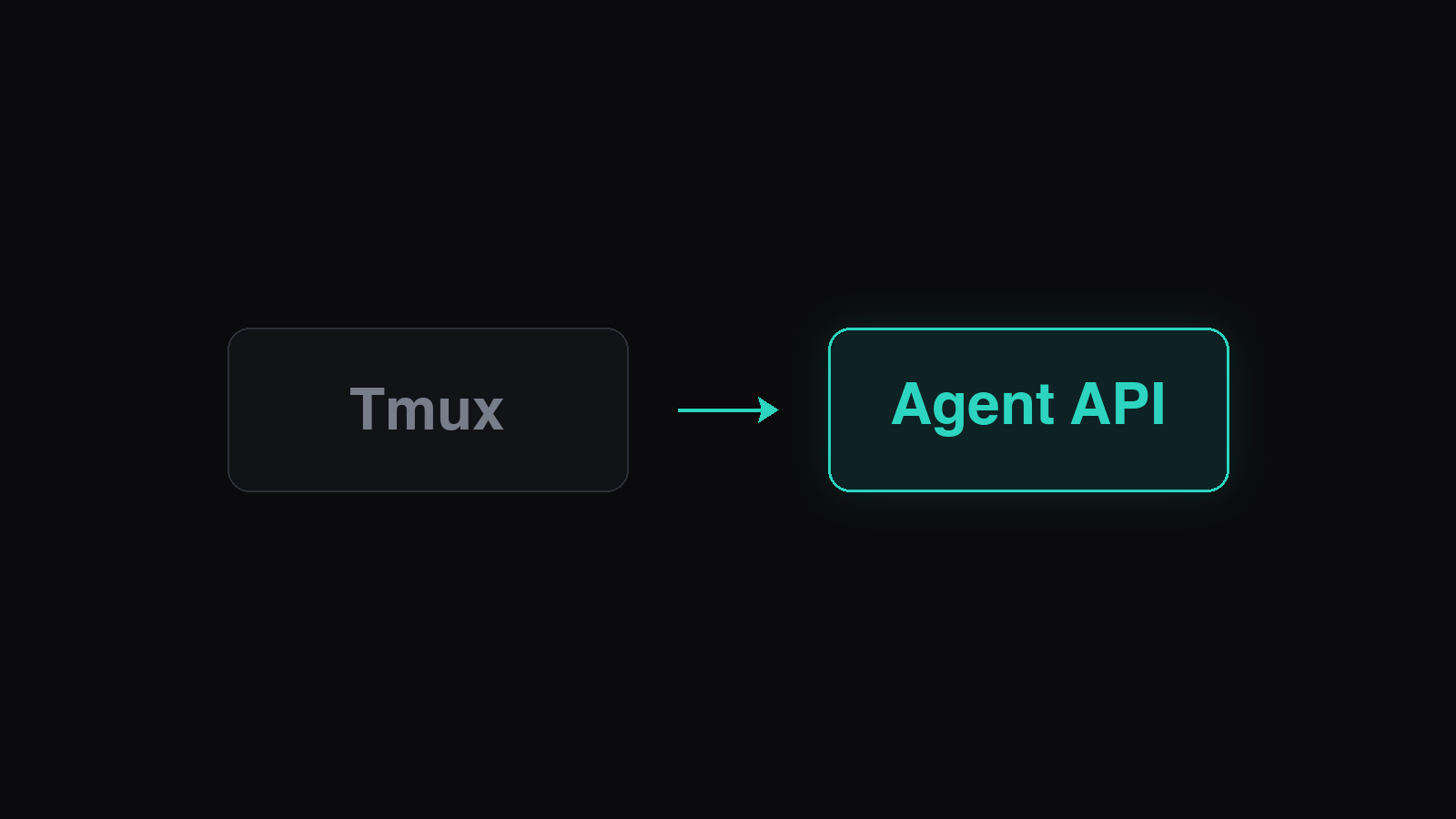
Ferryx ships the workspace-manager shape end to end: the daemon (ferryx --daemon, bundled or run headless) owns PTYs, the desktop and remote clients attach as consumers, and managed worktrees land in .orca-worktrees/wt-<slug> on branch orca/<ws-id>/<slug>. Cross-platform builds cover macOS (universal DMG), Windows (x64 installer), and Linux (AppImage and .deb) — see product facts for the dated claim list. If you are starting from tmux habits, the parallel agents use case walks the same five migration steps with this tool specifically.
FAQ
Is tmux actually bad for running coding agents?
No — tmux solves process survival reliably, and single-agent runs stay comfortable. The problem is downstream of survival: shared-server isolation, status visibility, and narrative recovery all require custom scripts that decay as the fleet grows. Keep tmux where it fits; replace it where the scripts start outnumbering the agents.
What is the first sign my tmux setup has outgrown agents?
You catch yourself writing another capture-pane | grep status script, or alt-tabbing to discover which agent is waiting on you. Both mean status has become a maintenance project instead of a feature.
Can I keep tmux and still get fleet visibility?
Partially. Pane titles, tmux-theme, and polling scripts can surface coarse badges, but isolation and structured recovery stay manual — the scripts own your layout, not your task state. Teams that need all four criteria met usually move the fleet, not the scripts.
Does Ferryx replace tmux entirely?
For agent sessions, yes by design: daemon ownership plus per-agent worktrees covers survival, isolation, and restore. Plenty of users keep tmux for plain interactive shells alongside — the tools do not compete on that ground.