
Run Claude Code, Codex, and Gemini in One Workspace
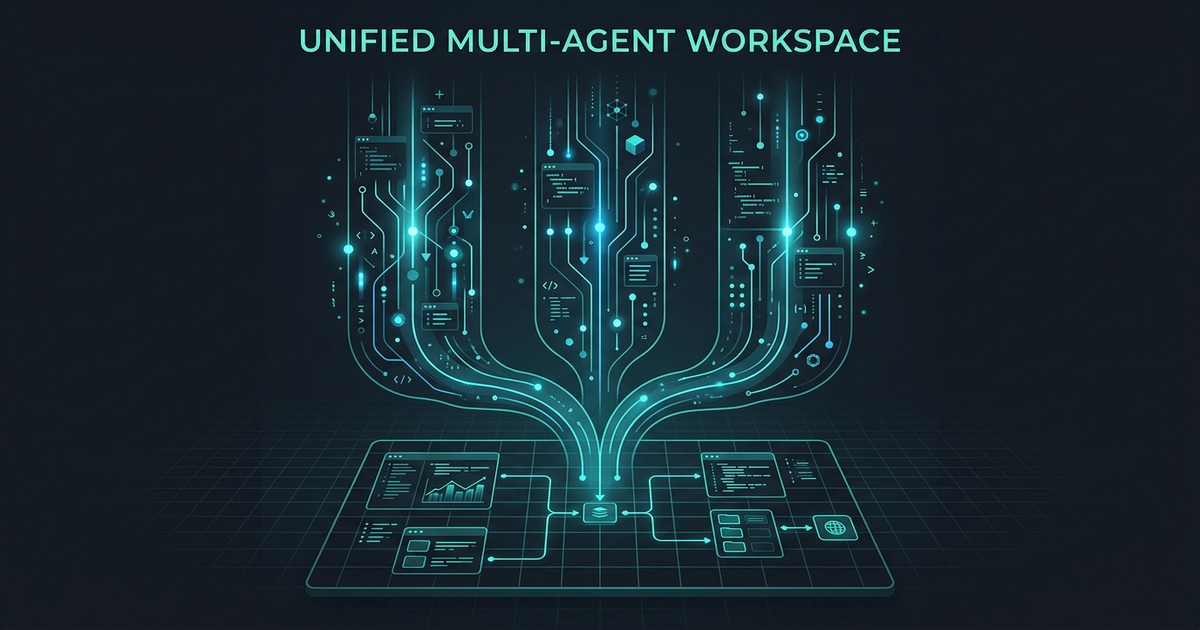
Run Claude Code, Codex, and Gemini in One Workspace. The workable structure is a workspace where each provider agent gets its own worktree and branch (so their edits never collide), panes are labeled by provider-and-task (so a glance answers “who is doing what”), and status flows into one place (so permission prompts from three different CLIs do not hide in three different scrollbacks). Ferryx’s workspace model — daemon-owned sessions bound to managed worktrees — is built for exactly this: one client, many providers, zero shared-checkout races.
Provider quirks that collide first
Running a single agent style is habit; running three styles in one repository surfaces differences that a single-provider setup never exercises:
Approval prompts differ. Claude Code pauses on tool permissions with its own dialog phrasing, Codex has its sandbox/approval mode prompts, Gemini CLI its own confirmation flow. Three different visual patterns means your peripheral vision — tuned to one — misses the other two. A run that looks “busy” from across the room may have been parked on an approval for ten minutes. This is the single most common mixed-fleet time sink.
Branch and checkout behavior diverges. Some agents prefer creating branches, some work in place, some stash aggressively. When two of them share one checkout, you inherit the union of their assumptions — including the classic .git/index.lock contention that appears exactly when both decide to commit at once. Isolation per agent is not optimization here; it is correctness.
Context and config live in different files. Each CLI reads its own config (CLAUDE.md, AGENTS.md, .gemini/, dotfiles), and their defaults for auto-compaction, tool inclusion, and shell behavior differ. In one shared workspace you end up with three partially-overlapping instruction sets confusing all three agents; per-provider worktrees let each agent see exactly the context file(s) its authors intended, while shared policy lives in the repo where all will read it.
Output cadence and TUI behavior differ. One streams thinking blocks, another renders a dense status line, a third redraws aggressively. Panes sized for one look wrong for another — which sounds cosmetic until an agent’s progress indicator sits below your pane fold and you stop monitoring it altogether.
Layout for a mixed fleet
Start from identity, not aesthetics — every pane answers three questions on sight: which provider, which task, which worktree:
- One worktree per agent task. The workspace creates (or you script)
wt-<task>checkouts — Ferryx manages this under.orca-worktrees/with a branch per session — so provider A refactoring tests and provider B adding a feature touch disjoint trees. Merging happens through normal PR review, not through hope. - Name panes for provider and task.
[CC] fix-flaky-test,[CX] api-pagination,[GM] docs-pass— a prefix convention you keep for all providers, so pane titles and any status strip reading them stay parseable. Do not encode only the provider: two Codex runs differing only by prefix still make you squint. - Group by interaction pattern, not vendor. Panes you drive (approval-heavy) sit in the primary workspace region; long unattended runs (doc sweeps, mechanical refactors) go to a background region or a second monitor/workspace. Vendor grouping sounds tidy and puts an approval-parked Gemini next to a sleeping Claude, which is the layout equivalent of noise.
- Centralize the shared context once. Repo-level instructions (AGENTS.md or equivalent) live in the shared repository and get pulled into each worktree; provider-specific files stay provider-specific. The rule: shared facts written once in-repo, provider preferences in each provider’s file, secrets nowhere in either.
- Keep a status surface that spans providers. Whether it is Ferryx’s session badges, a small script reading each CLI’s state file, or disciplined
pshabits — one view must answer “which of the three needs me.” If each provider demands its own alt-tab to check, you are running three tools, not one workspace.
Status and handoff conventions
The fleet’s throughput is gated by your attention, so conventions around status and handoff matter more than raw parallelism:
- Park visibly. When pausing an agent (end of day, waiting on review), make the parked state visible in the pane name or status badge — a parked and an actively-thinking pane must not look identical from a distance.
- Hand off with a written note. Each task’s worktree carries a short state file or commit message describing where the agent stopped: “tests green, awaiting decision on API shape.” Agents resume well from notes; humans resume better from them; and the next agent you point at the worktree inherits context instead of rediscovering it.
- Sequence merges; parallelize edits. Three agents may edit simultaneously in separate trees; the merges into main should be serial and reviewed. Conflict-resolution under three-way contention is where parallelism silently becomes rework.
- Budget approvals in batches. When several agents park on permissions, answer them in one sweep rather than as each notification arrives — context-switching cost per approval is what makes mixed fleets feel slower than they run.
Provider-comparison grounding for which agent gets which task is covered separately — Claude vs Codex vs Gemini CLI maps strengths to task types; this post assumes you have chosen and now need the three to coexist. The workspace mechanics — managed worktrees, session badges, one client across machines — are detailed in the parallel agents use case and the architecture page.
FAQ
Do I really need a separate worktree for each provider agent?
If they edit code, yes — provider choice does not change git’s lock semantics, and two agents committing to one checkout will contend on .git/index.lock and interleave edits regardless of vendor. The worktree-per-agent rule is provider-agnostic precisely because the failure mode is provider-agnostic; see the same-repo two-agent pattern for the mechanics.
How do I keep three different context/config files from contradicting each other?
Split by audience: facts every agent needs (architecture, commands, constraints) live once in the repo’s shared agent file; provider-specific preferences (tool policies, formatting quirks) stay in each provider’s own config; secrets stay out of both. Each worktree carries the split naturally, so every agent reads shared truth plus its own dialect — no merged mega-config that satisfies none.
What is the best way to notice when any of the agents needs approval?
Make it structural instead of vigilant: a status surface reading all three (badges, a dashboard, or a small watcher parsing each CLI’s prompt state) gives you one place to look, and pane-naming discipline makes the parked agent obvious on sight. The attention-economics reasoning — why one aggregated view beats three polling habits — is covered in the attention inbox design post.
Can one person actually supervise three coding agents at once?
With the isolation and status machinery above, supervision load becomes mostly approvals and merges rather than babysitting: agents work in disjoint trees, status is aggregated, and you engage at decision points. Without that machinery, three agents multiply your coordination cost faster than they multiply throughput — which is why fleet structure, not raw count, decides whether mixing providers pays off.